What is Permaculture?
According to Bill Mollison, cofounder and father of the movement,
“Permaculture is the conscious design and maintenance of agriculturally productive ecosystems which have the diversity, stability, and resilience of natural ecosystems.”
The concept of permaculture originated sometime in the early 1900’s, by a popular scholar, Franklin Hiram King. King wrote on east asian farming practices as a combination of “permanent” + “agriculture”. He highlighted the unique designs of these cultures’ edible landscapes and food gardens, noting that they improve and support the local ecosystem.
Later developed more in the 1970’s by Bill Mollison and David Holmgren, permaculture became a combination of “permanent” + “culture” to call out its usefulness for designing a strong culture that recognizes indigenous methods of working with land and people.
Today, permaculture is applied to home gardens, farms, business structures, and even city designs.

Permaculture Ethics
Everything we do is guided by three simple, non-negotiable pillars:
Earth Care: Rebuilding soil, forests, and water systems.
People Care: Supporting ourselves and our communities.
Fair Share: Taking only what we need and reinvesting the surplus.

The 12 Permaculture Principles
Observe & Interact: Learn from nature’s patterns before acting.
Catch & Store Energy: Collect resources (sun, rain, wind) when they are abundant.
Obtain a Yield: Ensure your work provides a tangible reward.
Self-Regulate & Accept Feedback: Learn from mistakes and discourage inefficient habits.
Use Renewable Resources: Favor nature’s abundance over finite materials.
Produce No Waste: View every "waste" product as a potential resource.
Design from Patterns to Details: Start with the big picture; fill in the specifics later.
Integrate Rather than Segregate: Place elements where they support one another.
Use Small & Slow Solutions: Start manageable; grow as your system stabilizes.
Use & Value Diversity: Variety builds resilience against pests and climate change.
Use Edges & Value the Marginal: The most productive activity happens where two systems meet.
Creatively Use & Respond to Change: Adapt to the future by observing and intervening at the right time.
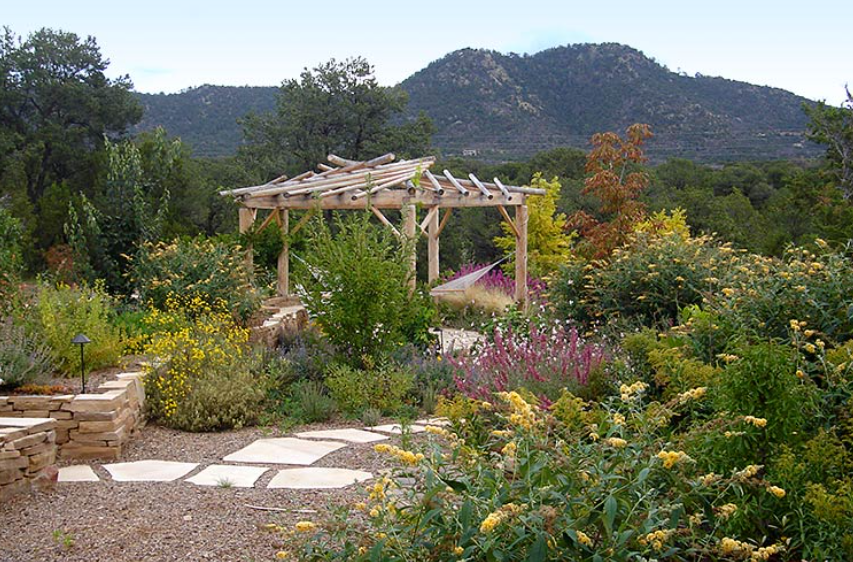
The Raincatcher LLC Santa Fe, New Mexico